 NFC OPERATIONS
New business signage data published on October 29, 2026, provides a useful perspective on the NFC vs QR Code debate. The research found that NFC represented 12% of one UK supplier's QR and NFC products in 2026, while more than one-third of its NFC items also included a QR Code.
The findings suggest that NFC is being used alongside QR Codes rather than replacing them. For retailers, restaurants, event organizers and other businesses, both technologies can serve the same practical purpose: connecting physical materials to useful online content.
But which is better for business: NFC or QR Codes? The answer depends on device compatibility, customer convenience, placement and the type of interaction a business wants to create.
2026 Research: NFC Is Not Replacing QR Codes
On October 29, 2026, UK signage manufacturer Cherry Grove Craft published an analysis of QR Code and NFC orders from 2023 through 2026. The research examined the company's own sales records, including business signs, badges, blocks and coasters.
The data showed that NFC accounted for 11% of the supplier's combined QR and NFC items in 2024, remained at 11% in 2025 and reached 12% in 2026 through October 29.
More than one-third of the NFC items manufactured by the company also carried a QR Code, providing customers with both tap and scan options.
Another finding concerned overall business demand. The share of company orders containing at least one QR or NFC item increased from 13% in 2024 to 16% in 2025 and remained at 16% in 2026.
These figures come from a single supplier's customer orders, mainly involving small UK businesses. They are not a national adoption survey and do not measure the effectiveness of NFC or QR marketing campaigns.
Nevertheless, the findings provide a documented example of how businesses are selecting these technologies for everyday printed materials.
NFC vs QR Code: What Is the Difference for Businesses?
NFC and QR Codes can both direct customers to websites, digital menus, product information, social profiles and other online destinations. The main difference is how customers access the information.
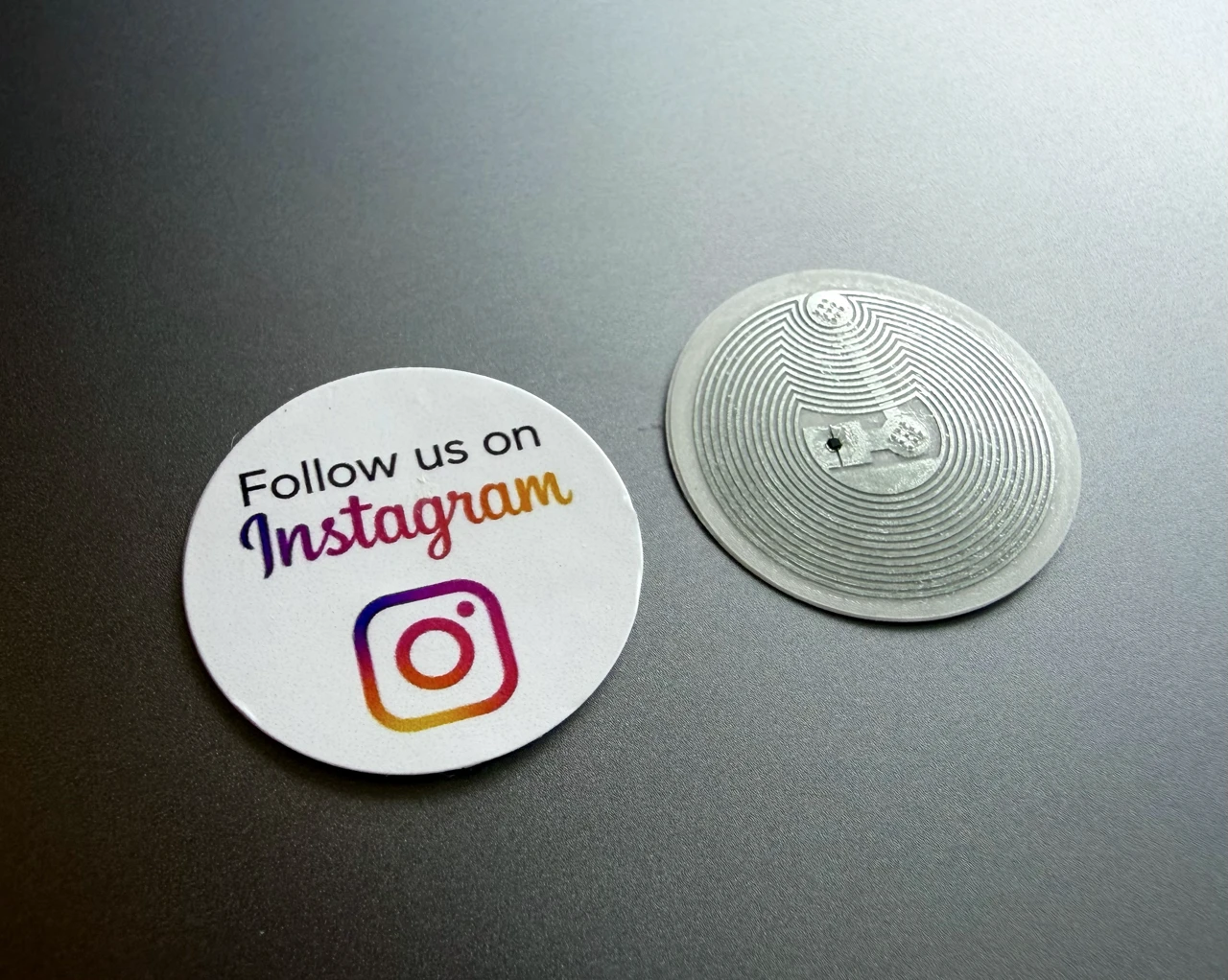
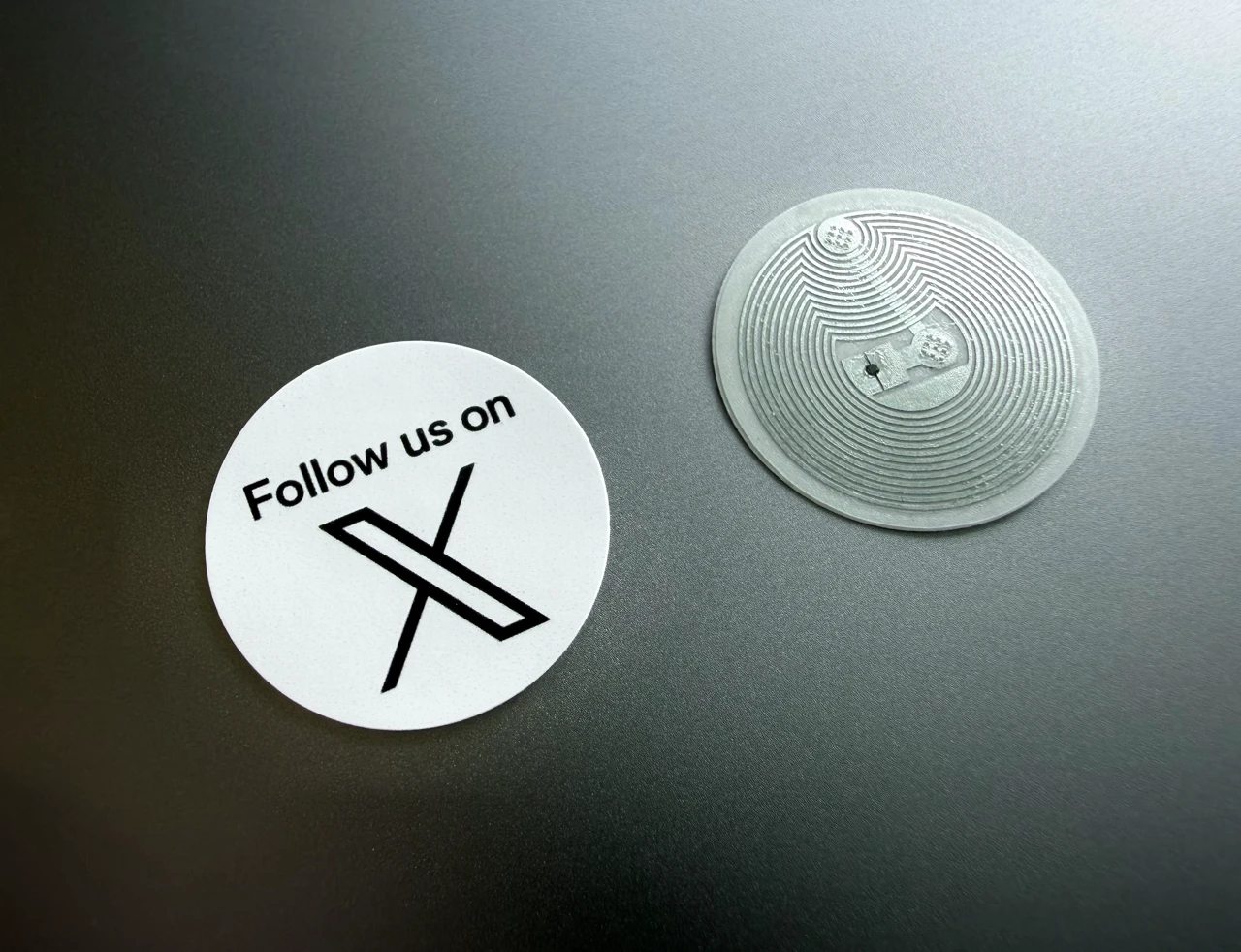
NFC, or Near Field Communication, uses a small chip that communicates with a compatible smartphone held nearby. A URL-encoded NFC sticker allows the phone to open a designated web address without scanning a printed code.
A QR Code is a printed visual pattern that a smartphone camera can scan to open a web link. It does not require an NFC chip, making it a straightforward option for printed marketing materials.
The main practical differences include:
- Interaction: NFC requires a nearby tap or hold with a compatible phone. QR Codes are scanned using a camera.
- Compatibility: QR Codes work with most smartphones that support camera-based scanning. NFC requires compatible hardware and suitable device settings.
- Distance: NFC works at very short range, while a QR Code can be scanned from farther away when its size, print quality and lighting allow.
- Physical requirements: NFC requires a functioning electronic tag. QR Codes can be printed directly onto paper, packaging and other materials.
- Customer experience: NFC offers a convenient tap option, while QR Codes provide a familiar and visible scanning alternative.
Neither method is universally superior. A QR Code may be more appropriate for a poster viewed from a distance, while NFC may be convenient on a counter, product label or printed card that a customer can easily reach.
Both methods generally work without a dedicated application on supported modern smartphones when opening a standard web address.
Where Businesses Are Sending NFC and QR Code Users
The 2026 research also examined 260 business items containing customer-supplied web links. The findings show how companies connect physical materials to their existing digital presence.
Among those items, 38% linked to a business website, 25% included Instagram, 24% included Google and 11% included Linktree. Some items contained multiple destinations, so these percentages are not mutually exclusive.
The analysis also found that 68% of the linked items pointed at least partly to a platform outside the business's own website.
This matters because the online destination determines what customers can actually accomplish after tapping or scanning. A link to a review form serves a different purpose from a link to a homepage or social profile.
For most businesses, the best approach is to choose a destination based on the customer's immediate need.
- Retail stores: Product information, promotional offers, loyalty registration pages or online catalogs.
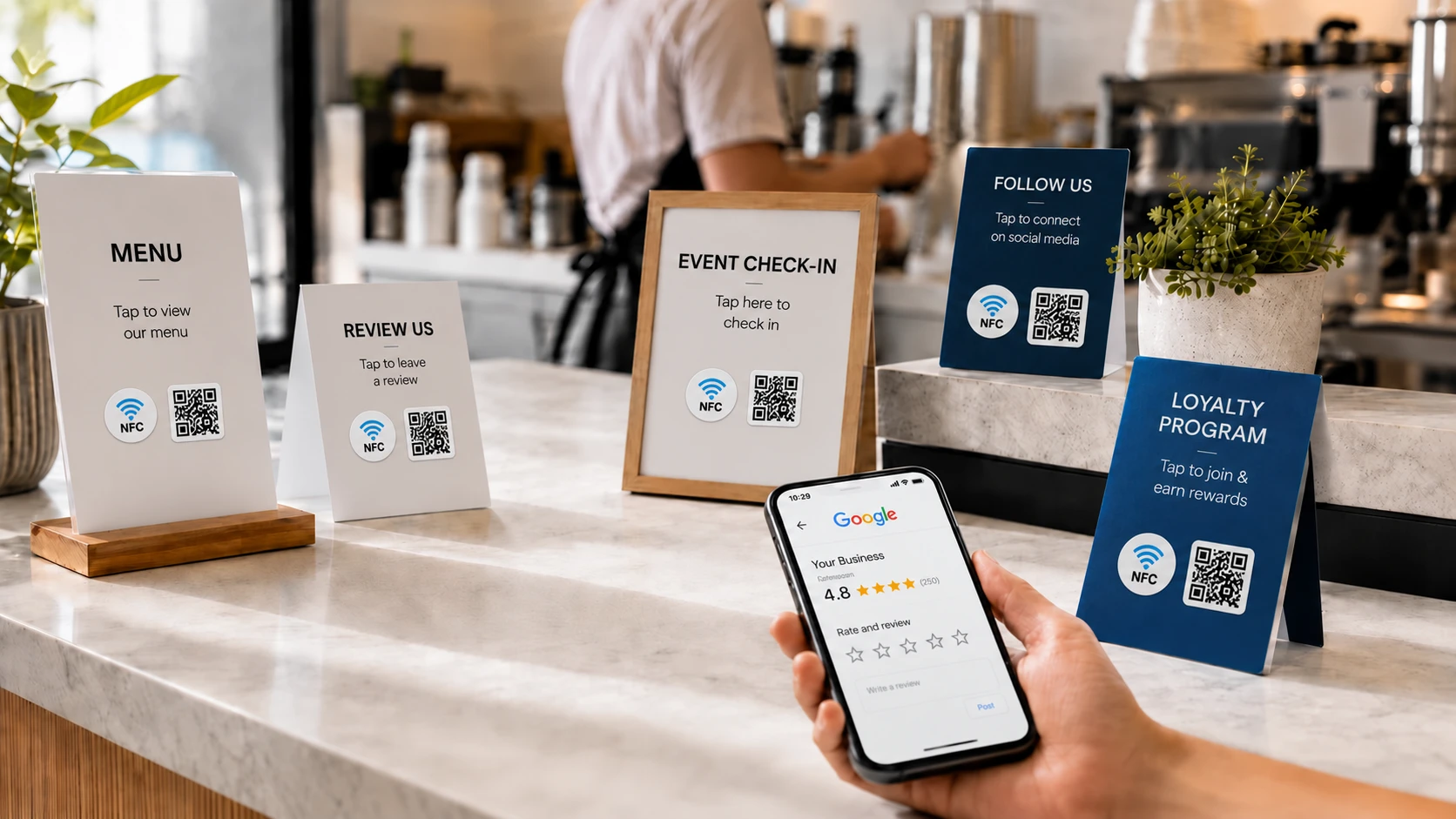
- Restaurants and cafés: Digital menus, reservations, customer feedback forms or current promotions.
- Service businesses: Appointment scheduling pages, contact information or Google review links.
- Events and conferences: Registration forms, agendas, speaker information or follow-up resources.
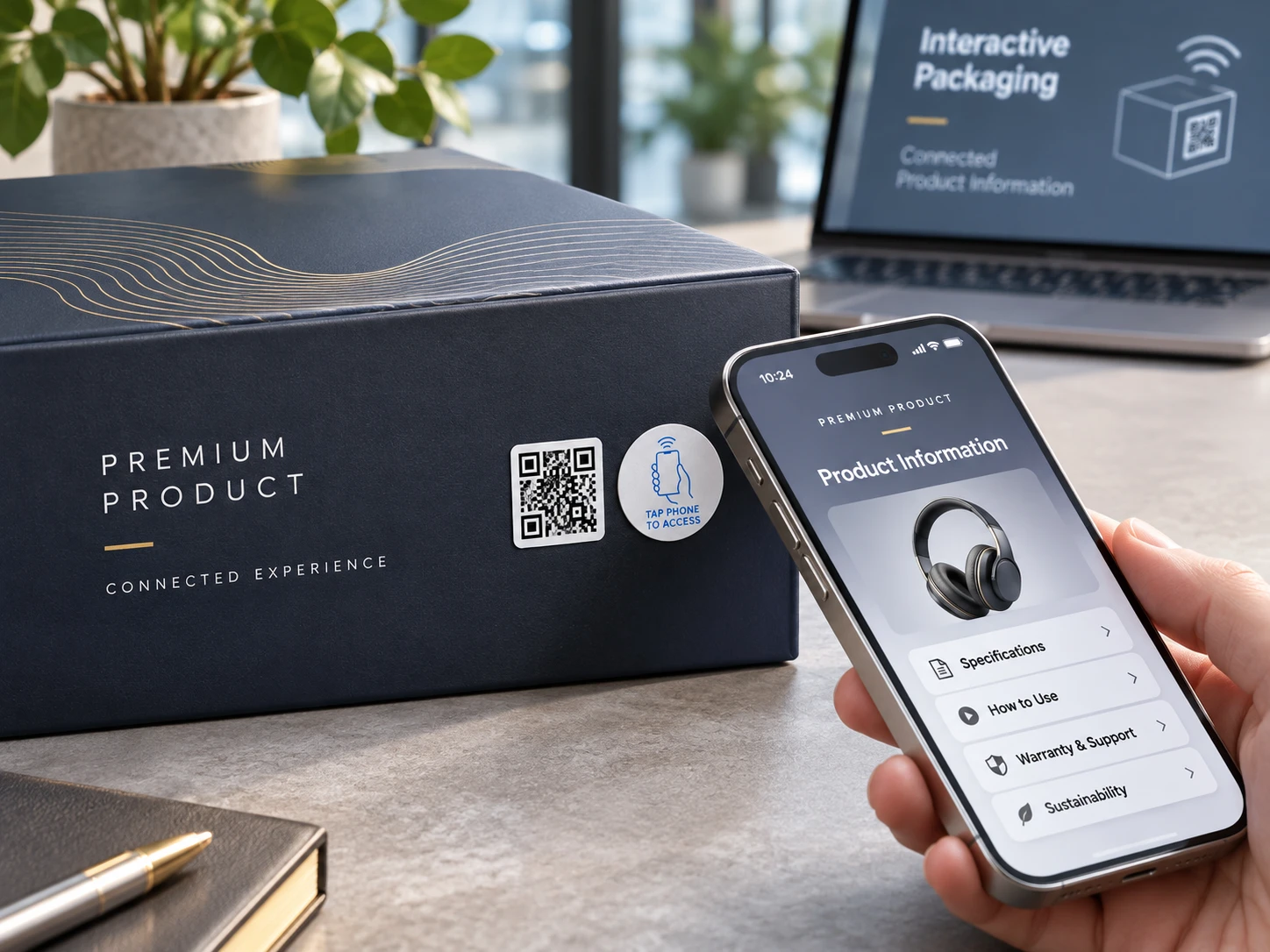
- Product brands: Setup instructions, care information, product tutorials or warranty registration websites.
These examples are practical applications of URL-based NFC and QR Code technology, not measured results from the UK study.
Businesses interested in customer feedback can also explore NFC and QR Code stickers for Google review links, which explains how to connect a physical touchpoint with an existing review page.
Why Combining NFC and QR Codes Makes Business Sense
The most relevant finding for business marketing is that more than one-third of the NFC items in the UK supplier's records also included QR Codes.
This combination addresses a practical challenge: customers do not all interact with printed materials in the same way.
Some prefer tapping an NFC-enabled phone against a nearby sticker. Others are more comfortable opening the camera and scanning a QR Code. Providing both methods allows customers to select their preferred interaction.
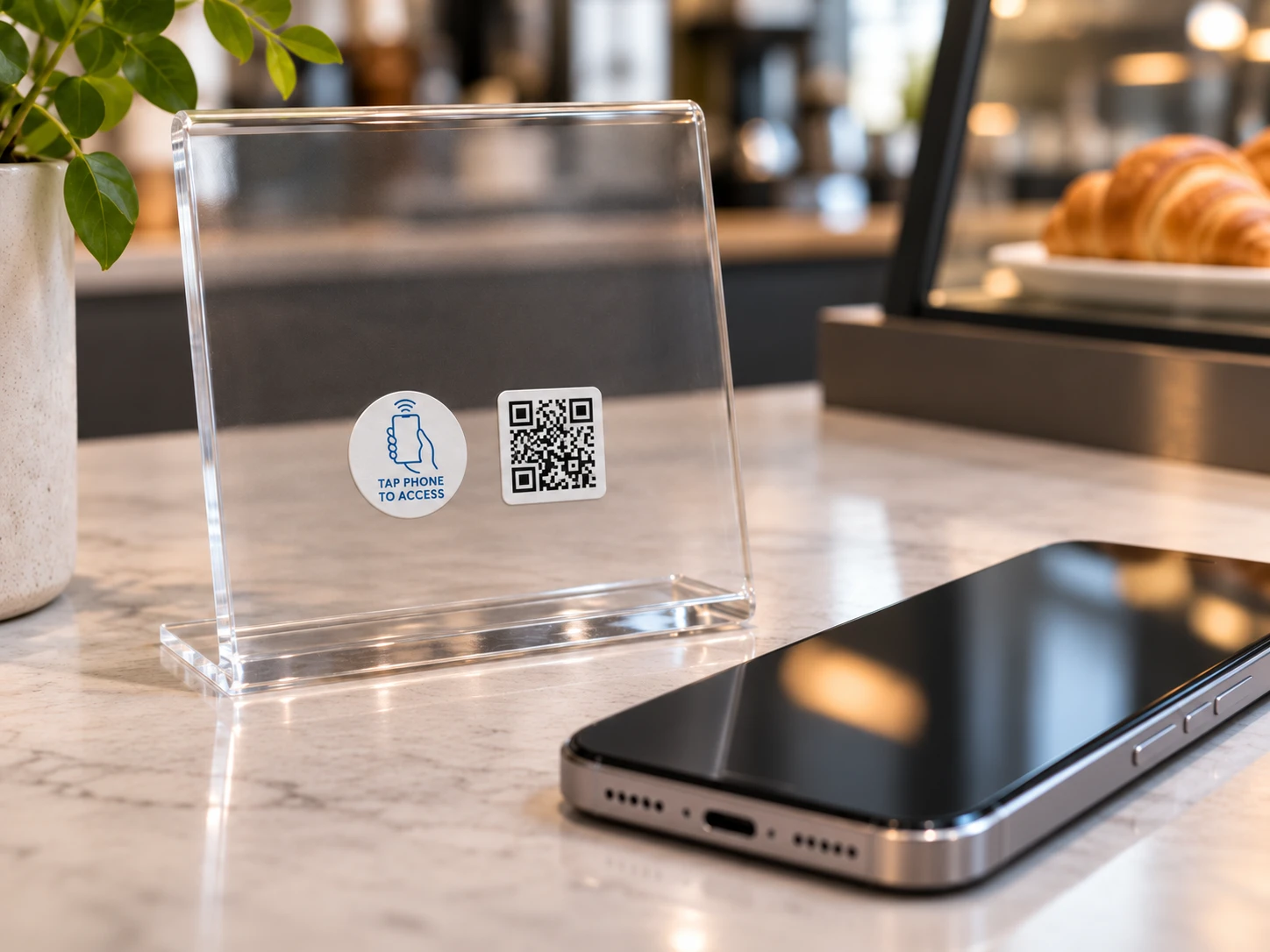
For example, a café can place an NFC sticker and matching QR Code sticker on a table display. Both can open the same digital menu, without requiring the customer to search for the restaurant's website.
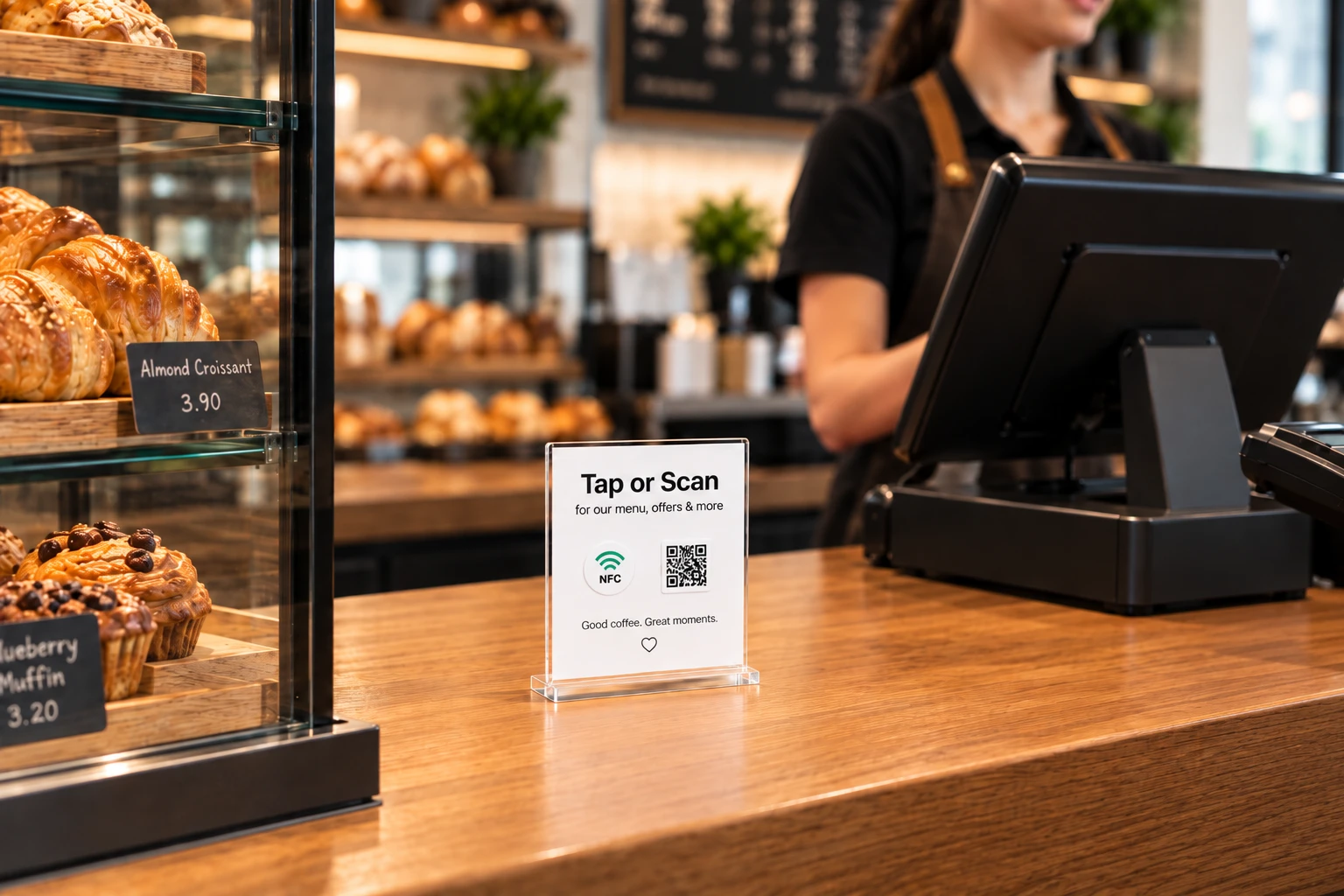
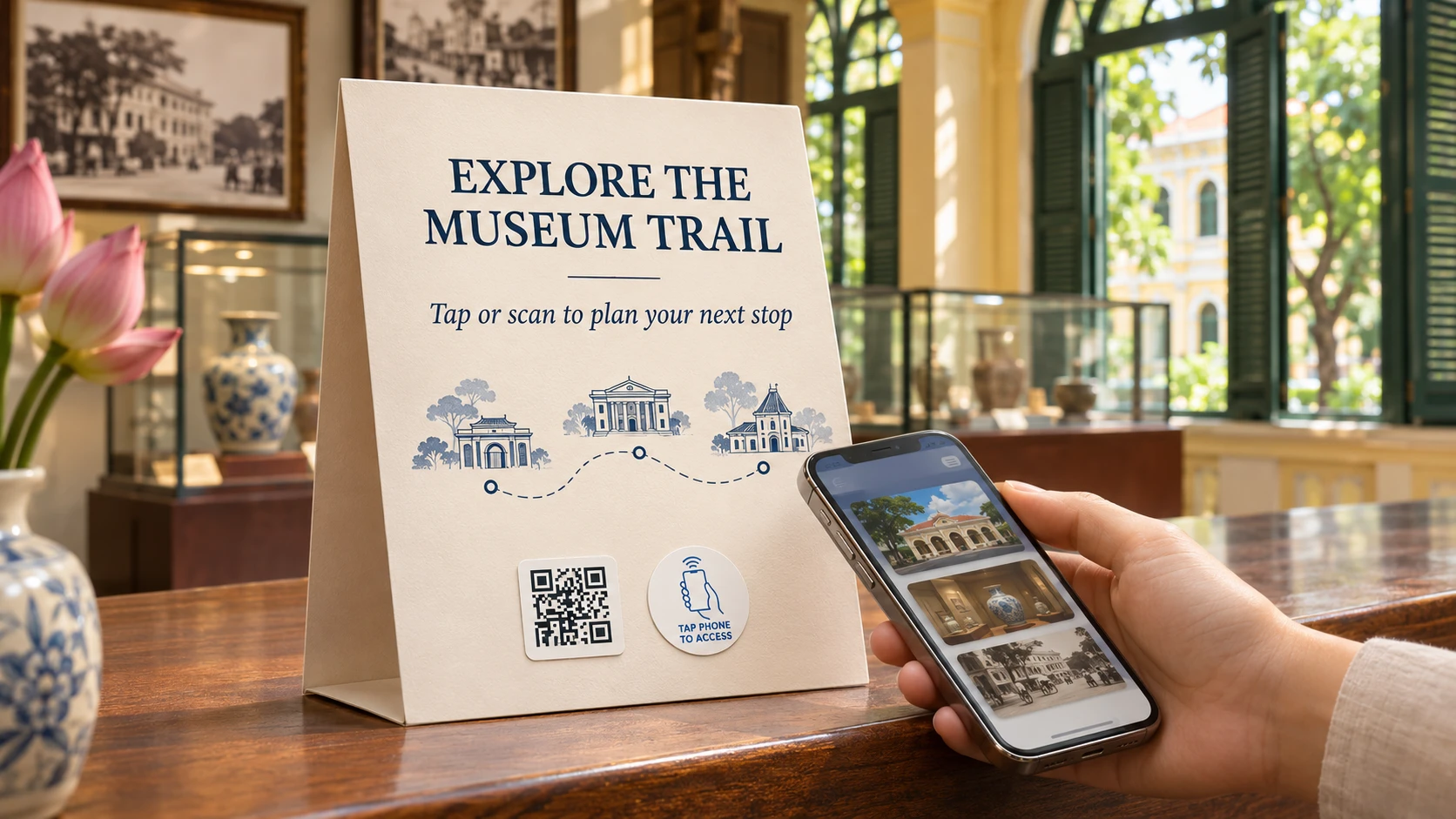
A retailer can use the same approach on a promotional display to open a product page or offer. An event organizer can place both stickers on a printed information board to provide access to an online schedule.
The advantage is not that NFC or QR technology performs the business action itself. Both simply provide access to a selected digital destination. Any booking, purchase, form submission or account activity is handled by the connected website or service.
The 2026 order data supports the observation that some businesses choose to combine NFC and QR Codes. It does not establish that using both automatically increases conversions or customer engagement.
How Businesses Can Add NFC and QR Codes to Existing Materials
Adding NFC functionality does not necessarily require replacing existing signs, packaging or promotional displays.
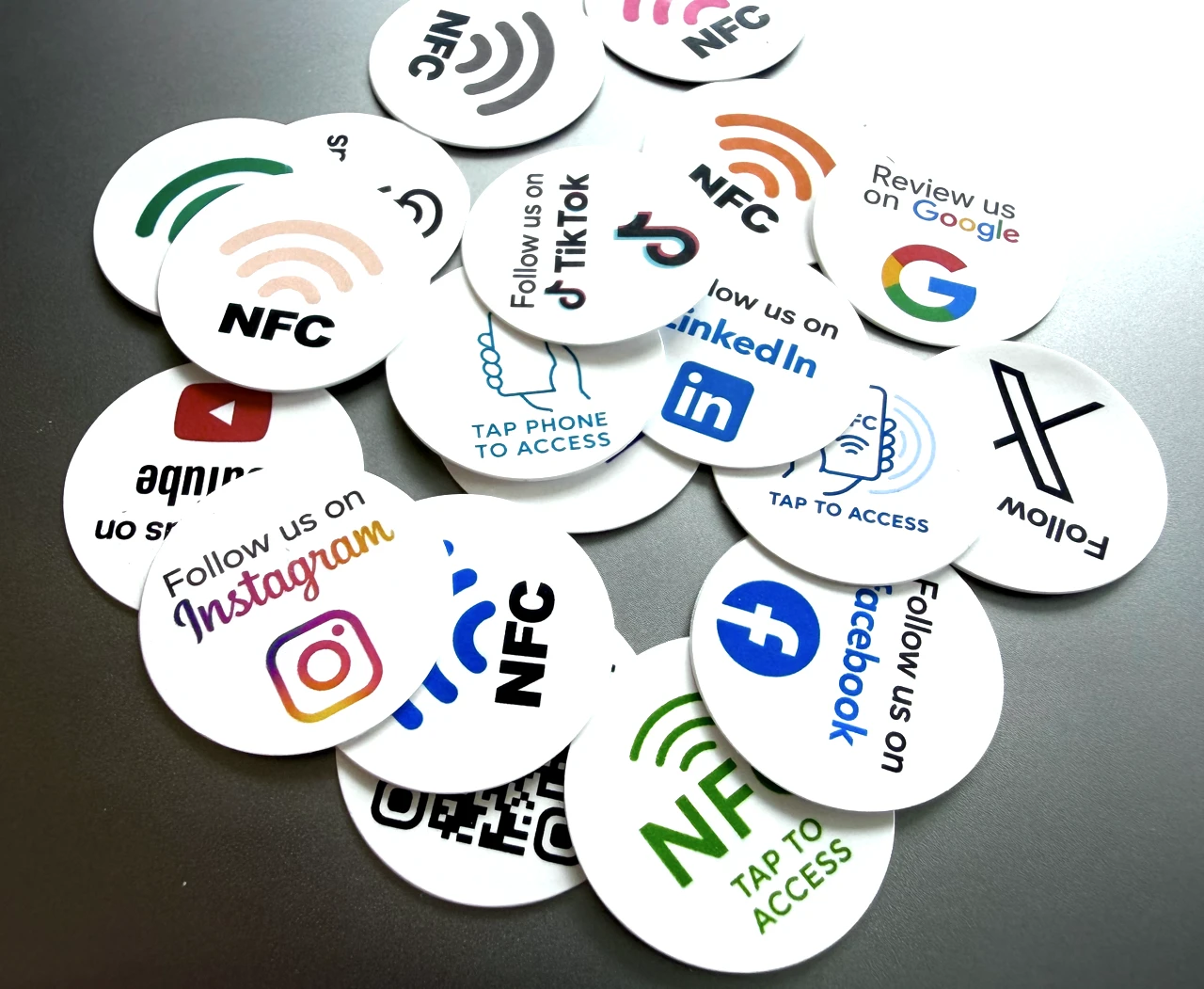
Custom printed NFC URL stickers can be applied to suitable physical surfaces, while matching QR Code stickers offer a second way to access the same destination.
NFCOP provides this approach through custom printed and professionally pre-encoded NFC stickers with matching QR Code stickers. Businesses select their design, web destination and quantity, and NFCOP prepares the stickers before delivery.
Customers do not normally need to program the NFC chips themselves. The stickers arrive ready to use on appropriate counters, printed cards, signs, product packaging and other customer-facing materials.
For campaigns requiring future changes, NFCOP also offers optional Dynamic URLs. Instead of encoding the final webpage address directly, the NFC sticker and QR Code use a managed short link that redirects to the selected destination.
This allows businesses to update the destination without replacing the physical stickers. Supported usage statistics can also help teams review how often their links are accessed.
For example, a printed promotional display can initially link to a seasonal offer and later redirect to a new product collection. The sticker remains in place while the online destination changes.
The functionality is explained further in NFCOP's guide to NFC and QR Code campaign tracking.
Businesses should remember that link activity is not the same as completed purchases, bookings or submitted reviews. Those outcomes depend on the linked platform and any additional measurement tools in use.
NFC or QR Code: Which Should Businesses Choose in 2026?
The latest UK order data provides a measured answer to the NFC vs QR Code question. QR Codes remain the larger category within the reporting supplier's orders, while NFC continues to serve as an additional contactless interaction method.
For businesses choosing a technology, the most appropriate option depends on where the customer interaction happens and how easily the destination can be accessed.
QR Codes are well suited to visible printed materials that customers may scan from a short distance. NFC stickers are useful when customers can approach or touch a clearly marked surface and have compatible smartphones.
Using both is a practical option for businesses that want to offer a tap experience without excluding customers who prefer scanning.
The most important factor remains the quality of the linked content. A clear instruction, suitable sticker placement and relevant destination page are more useful than adding technology without a defined purpose.
Businesses looking to introduce both methods can create custom NFC and QR Code stickers with NFCOP. The stickers are printed, encoded and paired before delivery, allowing existing physical materials to connect directly with the chosen online content.