 NFC OPERATIONS
A new academic study indexed on October 28, 2026, examines how interactive product packaging influences consumer trust, engagement and purchase intentions. The research highlights an important issue for retailers and product brands: the value of connected packaging depends on the information and experience customers receive after interacting with it.
Published in the Journal of Retailing and Consumer Services, the research involved 2,400 participants across Asia, Europe and North America. It compared conventional packaging with digitally connected experiences featuring product transparency, gamification and AI-driven personalization.
For businesses exploring NFC and QR Code packaging, the findings offer a useful direction. Connecting physical products to relevant online content may help create more meaningful customer interactions, although the study does not establish that adding an NFC sticker alone increases sales.
What the 2026 Interactive Packaging Study Found
The interactive packaging research by Chen Su, Xuejiao Wang and Mei-ling Soong examined consumer responses to different digital experiences associated with physical packaging.
The researchers conducted three quota-sampled experiments involving 800 participants per region. The study compared conventional packaging with experiences designed around product transparency, interactive activities and AI-personalized content.
The research reported three important findings:
- Consumer trust matters: The analysis identified relationships between perceived value, trust, engagement and purchase intentions.
- Digital experiences are not equally effective: AI-personalized packaging generated the strongest increases in purchase intention within the experimental conditions.
- Regional differences influence responses: The researchers reported stronger responses to gamification in collectivistic consumer groups and greater interest in transparency among individualistic groups.
These findings concern the digital experiences tested in the experiments. They are not evidence of guaranteed sales growth, and the research did not establish that NFC stickers outperform QR Codes. Actual results will depend on the products, customers and online destinations involved.
Why Product Information and Transparency Matter
Traditional packaging has limited space for product details. Brands must communicate essential information while leaving room for their visual identity, product descriptions and required labeling.
Connected packaging provides an additional route to information. A smartphone can open a product-specific webpage containing detailed instructions, materials, care guidance, comparison information or after-sales support.
For a business, the central question is what customers need to know before or after purchasing a product. A useful digital destination should answer that question directly rather than sending visitors to an unrelated homepage.
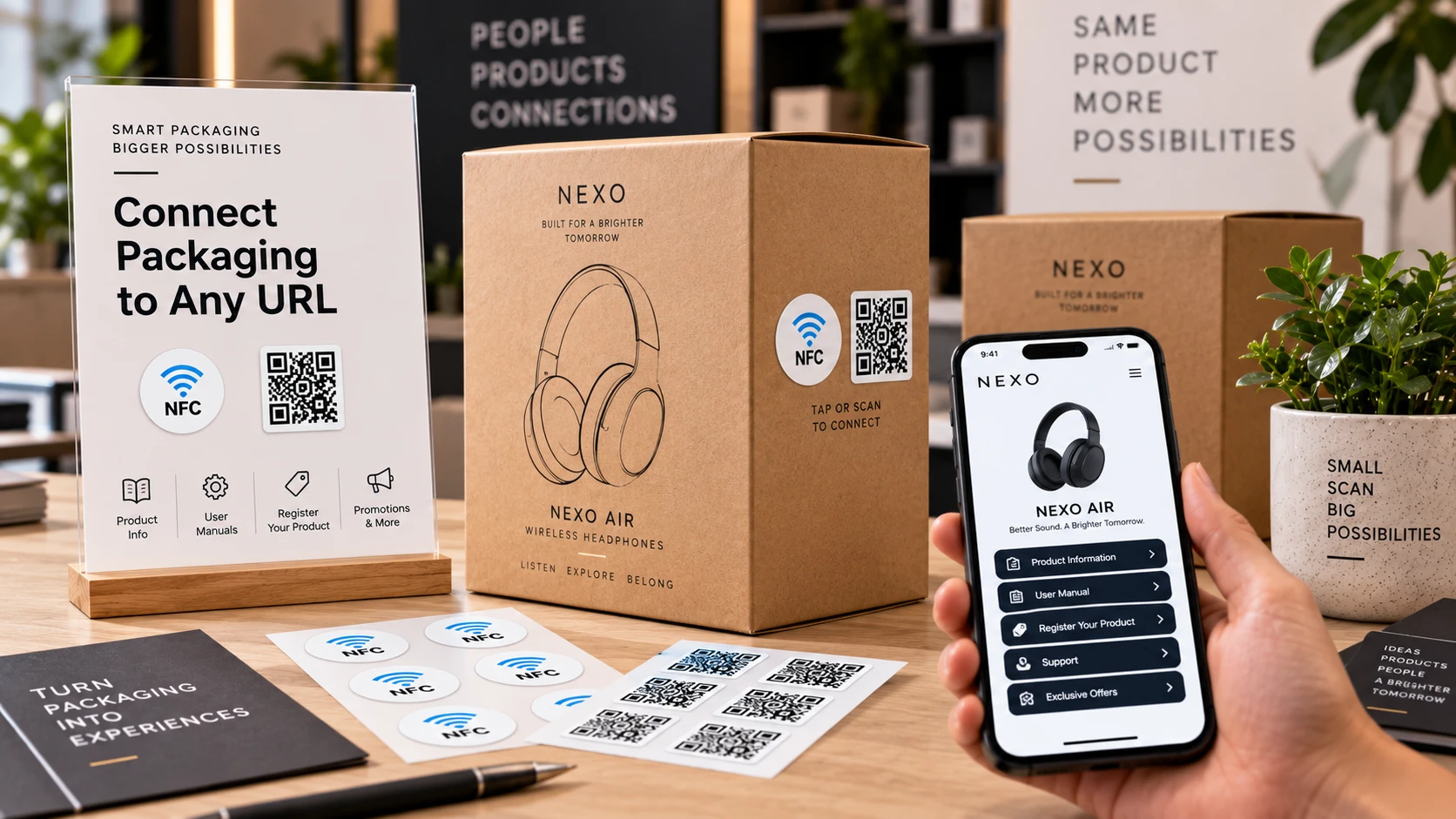
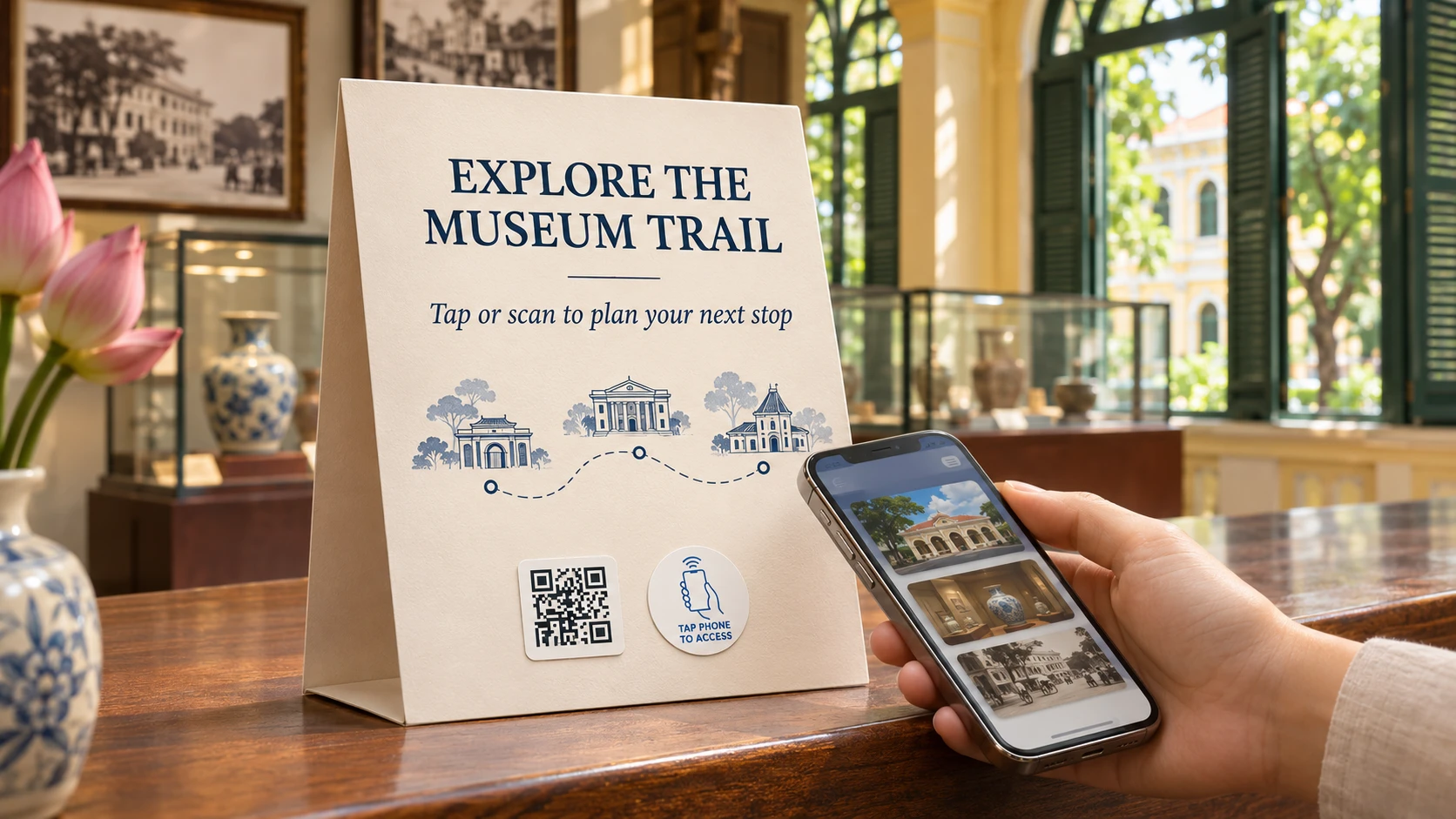
The illustration above shows how NFC and QR Code stickers can connect a physical package to product information on a smartphone. This is an example of a possible customer experience, not a deployment from the academic study.
Businesses considering this approach can review NFCOP's existing guide to connecting product packaging to online content with NFC and QR Code stickers.
Three Practical Applications for Retailers and Product Brands
The research points toward an important distinction: a digital link provides access, while the destination website determines the experience. Businesses can apply this principle using existing, mobile-friendly webpages without building a complex technology platform.
- Product packaging and transparency: Place NFC and QR Code stickers on a product box or suitable printed insert. Link to a dedicated webpage containing materials, product specifications, manufacturing information or care instructions. Customers can access information relevant to the product they are holding.
- Retail shelves and product comparisons: Add a tap-or-scan point beside a shelf display. Link to an existing comparison page showing available options, product features and answers to common purchasing questions. Shoppers can review information before deciding what to buy.
- Post-purchase support and engagement: Place stickers on a thank-you card or inside packaging. Link to a product registration form, setup guide, customer support page or current loyalty offer. The linked website handles registrations, offers and any customer information collected.
Each application should have a specific destination and a clear printed instruction. Examples include "Tap or Scan for Product Details," "Compare Product Options" and "Open Your Care Guide."
Retailers can also explore NFC and QR Code links for retail loyalty pages and promotions, provided those programs are already supported by the business's website or chosen service.
How NFC and QR Code Stickers Support Connected Packaging
Near Field Communication, or NFC, allows a compatible smartphone to read a small tag when placed close to it. For ordinary NFC URL stickers, the phone can then open the web address encoded in the tag.
QR Codes offer another way to access the same destination using a phone camera. Combining the two gives customers a choice between tapping and scanning, rather than depending entirely on one interaction method.
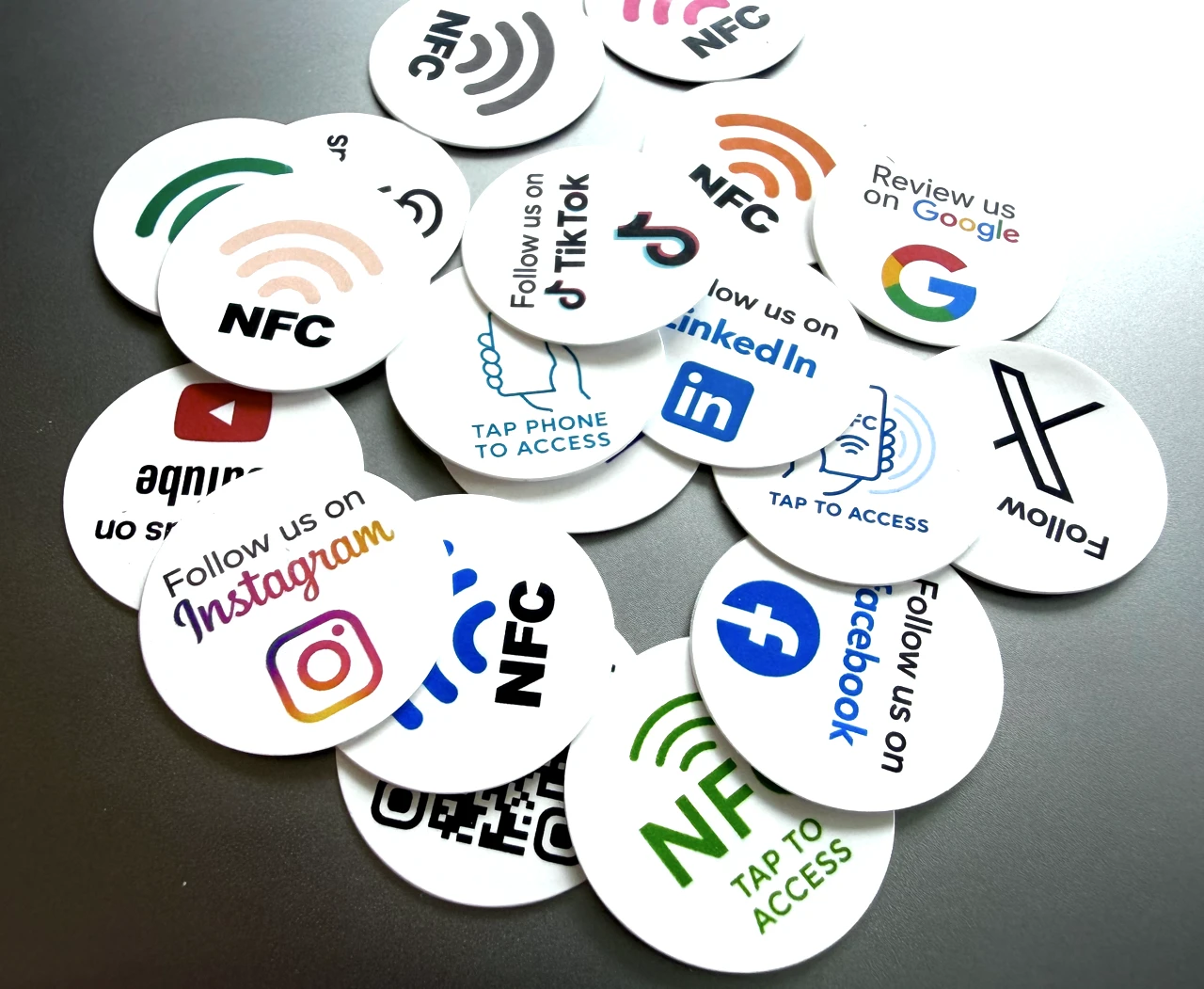
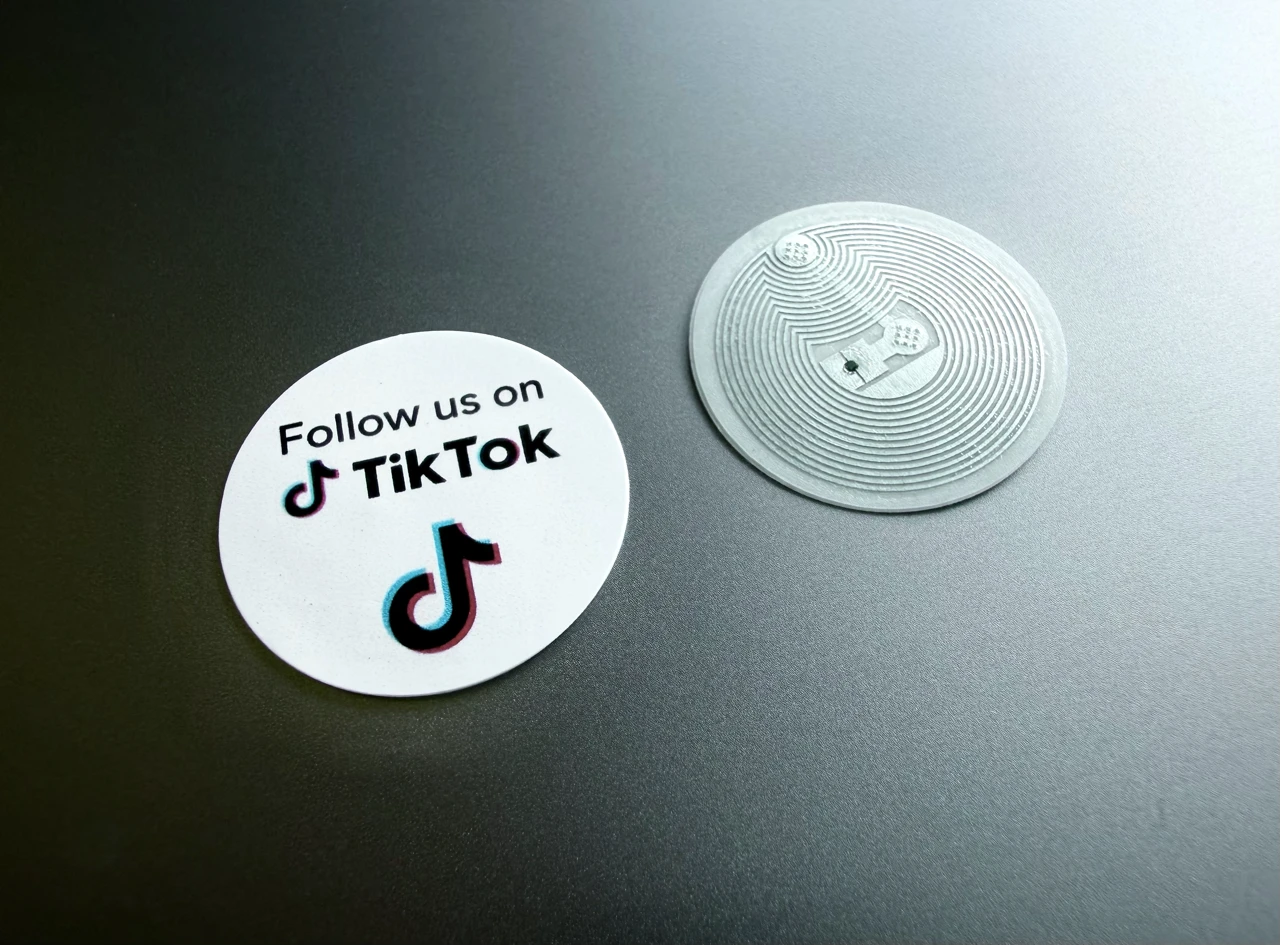
NFCOP provides custom printed NFC URL stickers with matching QR Code stickers. Customers select their designs and destination URLs, while NFCOP prepares the printing, NFC encoding and matching QR Codes before delivery.
This arrangement can support product information, promotional content and customer service pages. It does not automatically create AI personalization, loyalty accounts, interactive games or product authentication. Those capabilities require separate functionality on the destination website.
NFCOP also offers optional Dynamic URLs, allowing customers to change the destination associated with a sticker after production and access supported tap and scan statistics. These statistics indicate link activity, not confirmed purchases or completed registrations.
Before deployment, businesses should review the NFCOP compatibility, Dynamic URL and placement guidance. Supported-phone behavior, internet connectivity and mounting surfaces can affect the customer experience.
How Businesses Can Test Interactive Packaging
The study offers a reason to examine digital packaging experiences, but it does not replace testing with real customers. Retailers and brands should evaluate the usefulness of their linked content before expanding an NFC and QR Code campaign.
A practical first test can focus on one product, one customer question and one relevant webpage.
- Define the action: Decide whether customers should read product information, compare options, view instructions or open an existing form.
- Prepare the webpage: Make the destination easy to navigate on a phone, with accurate content and a clear next step.
- Choose the placement: Position the NFC and matching QR Code stickers where customers will naturally look for that information.
- Check the experience: Test the tap, QR scan, page loading and any relevant buttons on different supported devices.
- Measure appropriately: Review available link statistics and use the destination website's own analytics for completed actions, where configured and permitted.
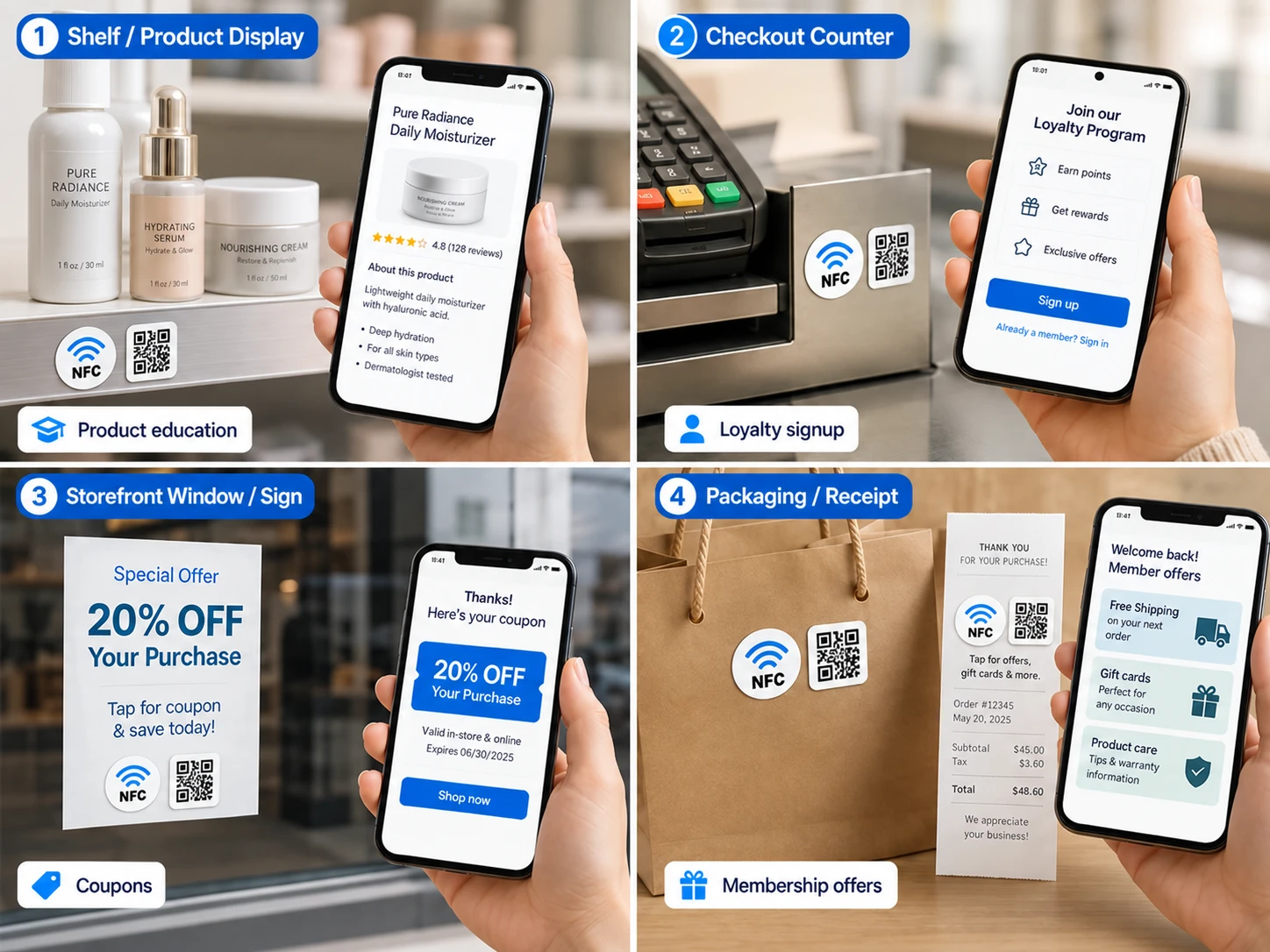
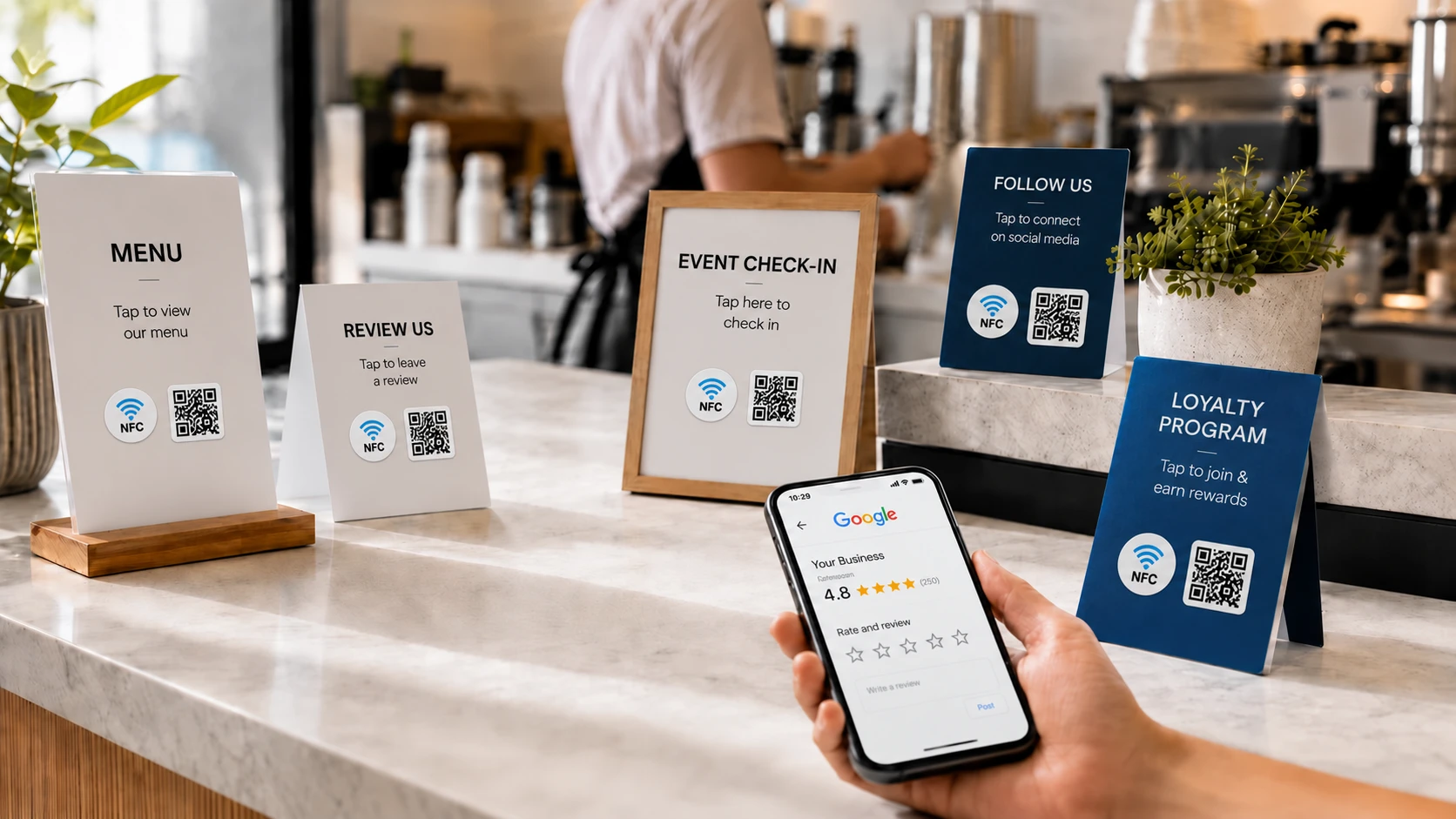
Retail displays, checkout counters and packaging provide different opportunities for digital interaction. The illustration shows possible placements, not measured results from a commercial campaign.
If businesses want to compare different content approaches, they can test product-information pages against more promotional destinations. Changes in customer behavior should be evaluated using appropriate website measurements rather than inferred from tap counts alone.
What the Research Means for the Future of Connected Packaging
The October 2026 research contributes evidence that interactive digital content can influence how consumers evaluate products. It also suggests that companies should consider customer trust and perceived usefulness when designing connected packaging experiences.
For smaller brands, the practical opportunity is not necessarily sophisticated AI or expensive packaging technology. A clear, well-maintained product webpage can be a useful starting point, with NFC and QR Code stickers making that webpage accessible from a physical product.
Businesses interested in this approach can start by selecting one useful destination and testing it on a small number of packages or displays. NFCOP's custom printed, pre-encoded NFC and QR Code sticker service provides a practical way to prepare those physical touchpoints without programming the NFC tags themselves.
The main lesson is straightforward: connected packaging should give customers a useful reason to interact. The value comes from the information, service or action available after the tap or scan.