 NFC OPERATIONS
NFC tags for accessible visitor information offer a practical way to connect physical signs, exhibits, rooms and public spaces to useful digital content. Visitors with compatible smartphones can tap an NFC tag to open a webpage containing information about a location, available services or an exhibit. A matching QR Code provides another way to reach the same destination.
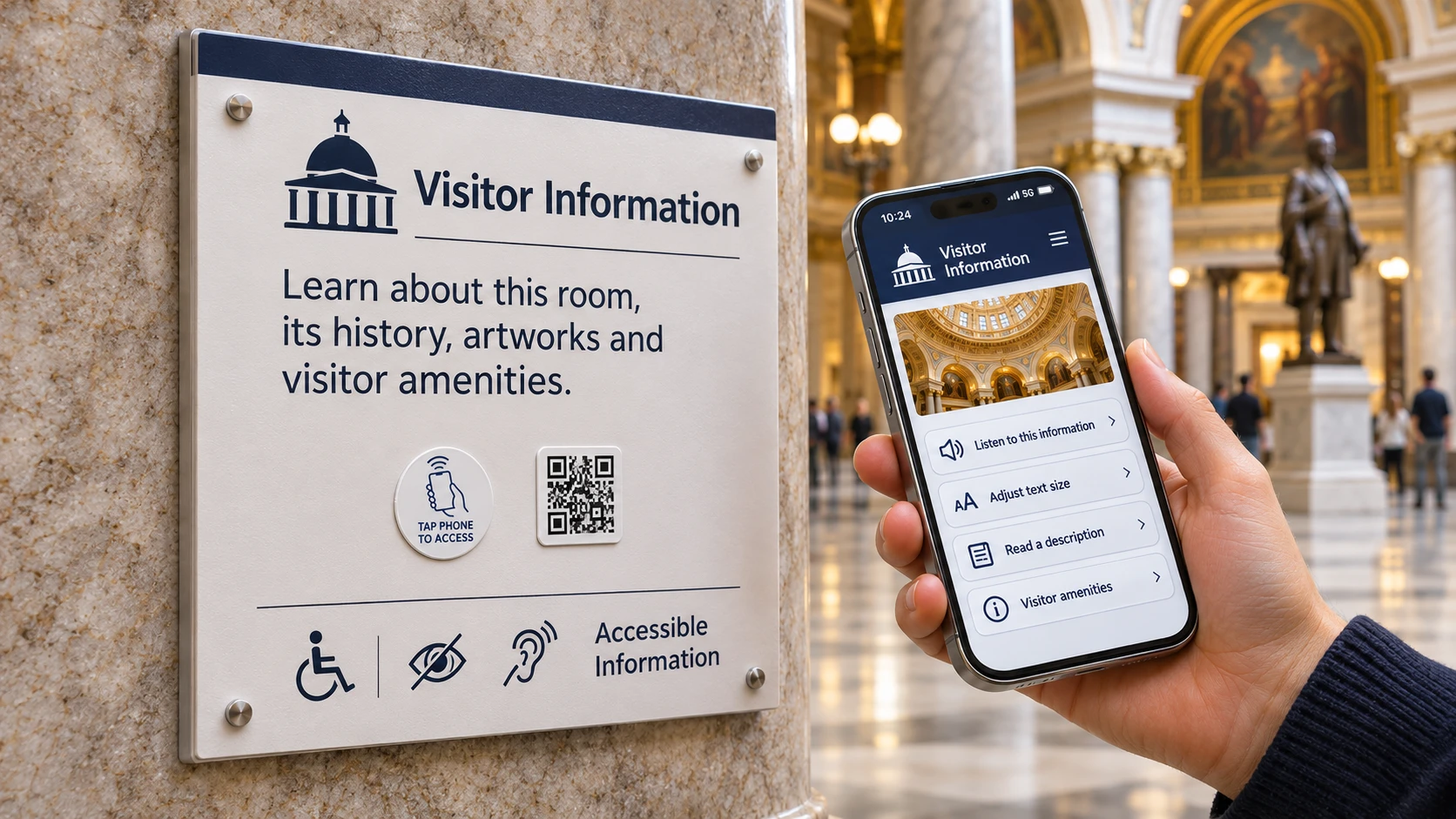
This application is receiving attention in the public sector. On November 5, 2026, the Massachusetts Bureau of the State House issued a request for an accessible NFC-based information system designed to help people with disabilities, including blind and low-vision visitors, access descriptions of rooms, artworks, exhibits and amenities.
The official Massachusetts State House procurement notice calls for passive NFC tags, accessible mobile applications and content-management tools. It is a procurement announcement, not confirmation of a completed installation.
Although the government project requires specialized software, its focus on delivering useful information at physical locations is relevant to museums, hotels, visitor centers, public facilities and event venues.
Why NFC Tags Matter for Accessible Visitor Information
Traditional information signs have limited space. They usually provide short descriptions, directions or instructions, but may not accommodate detailed explanations, multiple languages or alternative content formats.
NFC tags can connect a physical information point to a webpage with additional details. Instead of trying to fit everything onto a printed sign, a venue can provide a short description alongside a tap-or-scan option for visitors who want more information.
A well-designed visitor information webpage may include:
- Readable descriptions of rooms, exhibits and public amenities.
- Audio descriptions or written transcripts prepared by the venue.
- Accessibility information, available assistance and contact details.
- Visitor instructions, service hours and facility information.
- Language options and other features provided by the website.
The important distinction is that an NFC tag provides access to information; the linked website provides the actual content and accessibility features.
For visitors who use screen readers, enlarged text or other assistive technologies, a suitably designed webpage may be easier to use than a small printed label. However, a physical NFC installation must also be easy to find and reach.
Where Businesses Can Use NFC Tags for Visitor Information
NFC and QR Code stickers can be added to existing printed materials, information boards and suitable displays. Each location can connect to a specific webpage relevant to the visitor's immediate needs.
Museums and exhibition spaces
An NFC information point beside an exhibit can open a webpage containing an extended description, historical background, audio commentary or a written transcript. Visitors can access additional information without requiring every detail to appear on the physical display.
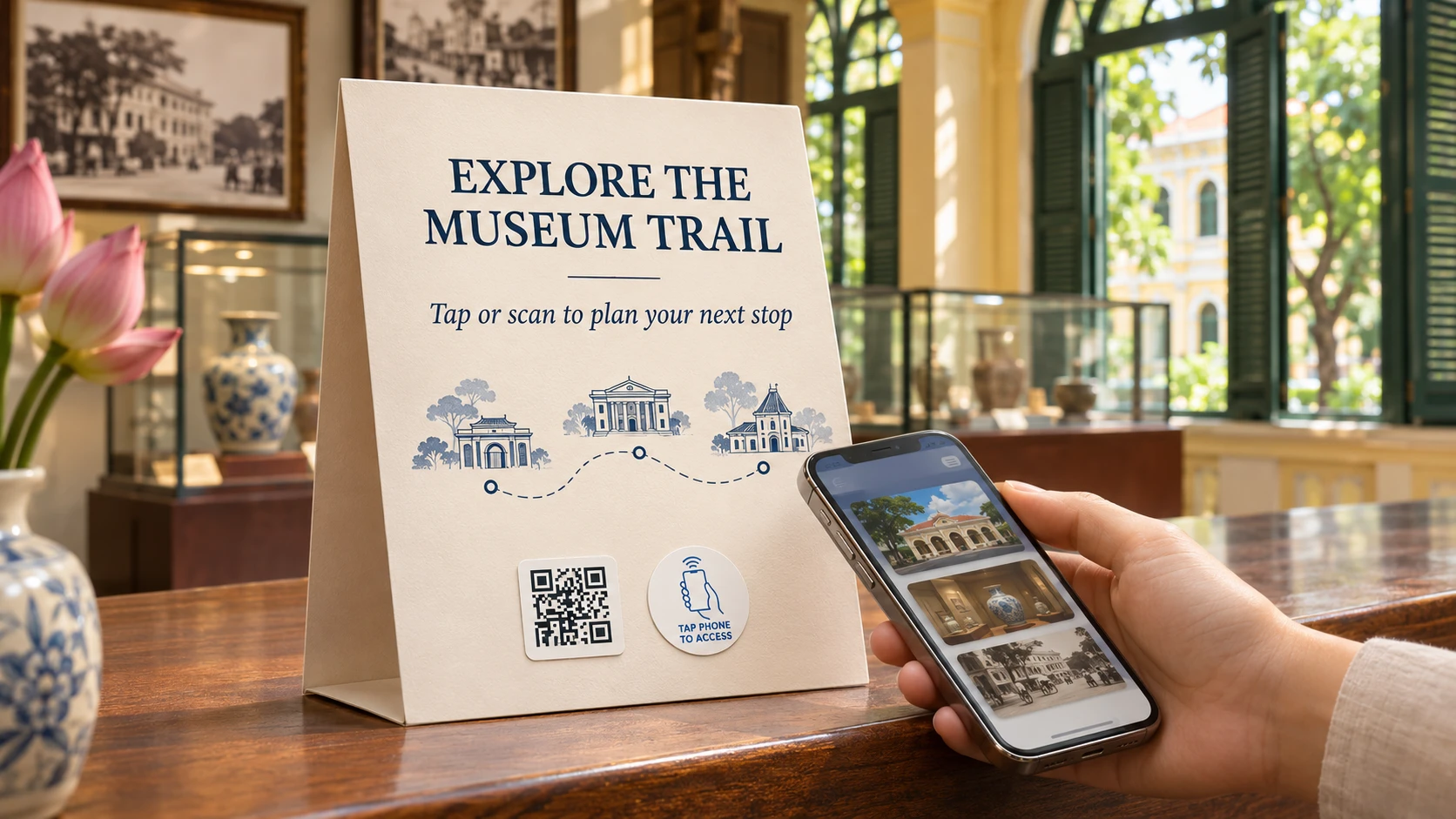
For museums operating multiple locations, NFCOP's article about NFC museum heritage trails explores another application involving connected cultural information.
Hotels and hospitality venues
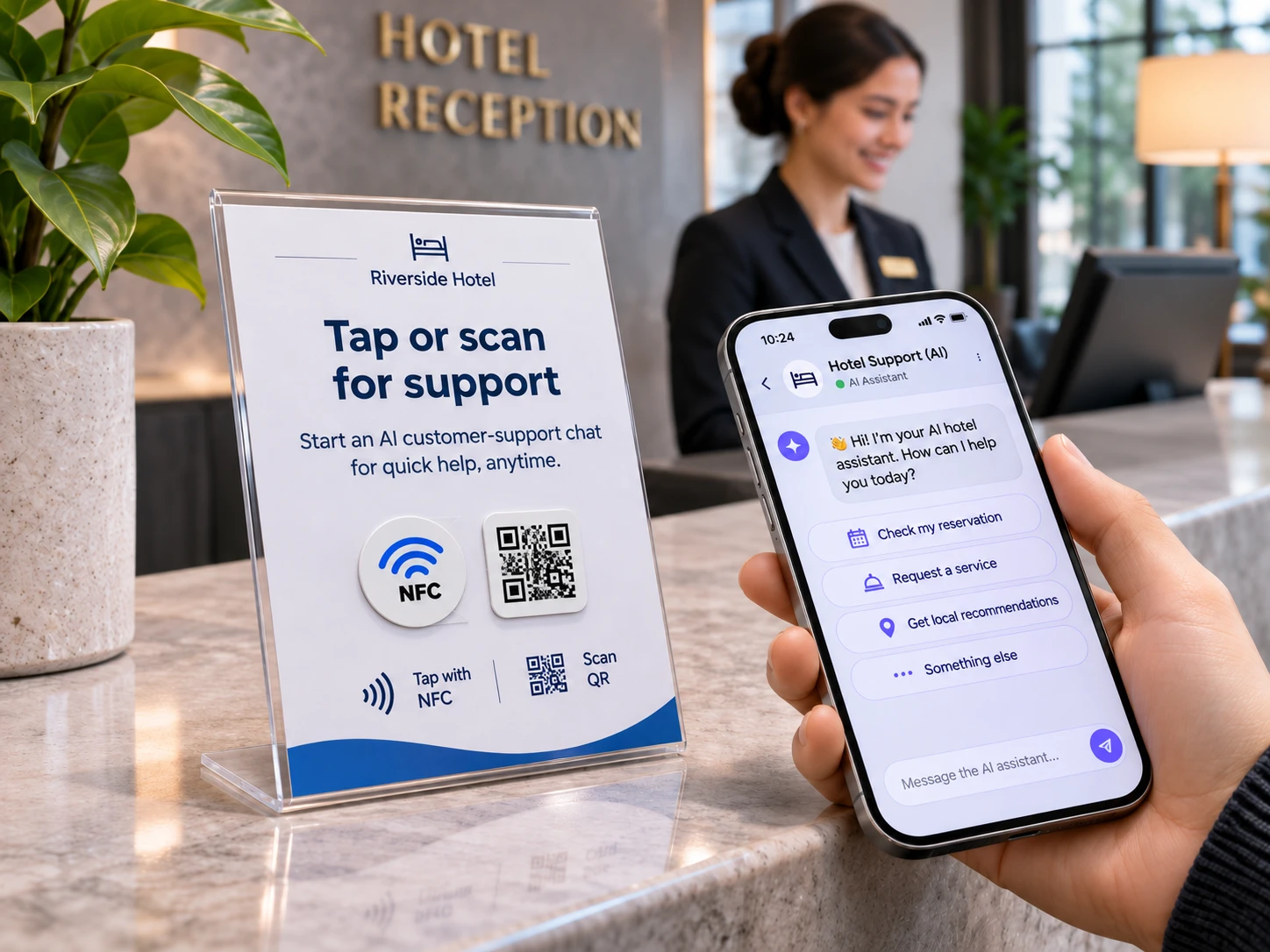
A reception sign or guest information display can link to an existing online directory with accessibility information, available services, opening hours and assistance contacts. The hotel remains responsible for keeping this information accurate and accessible.
This extends the practical applications described in NFCOP's guide to NFC and QR Code stickers for hotel guest information.
Public buildings and visitor centers
An NFC sticker on a clearly identified information sign can open the building's existing visitor guide. The page might provide service locations, accessibility facilities, opening hours and contact information for assistance.
Conference and event venues
Event organizers can place NFC and QR Code stickers near registration desks, information counters or printed event signs. The destination could be a mobile-friendly information page with venue facilities, accessible services, event schedules and support contacts.
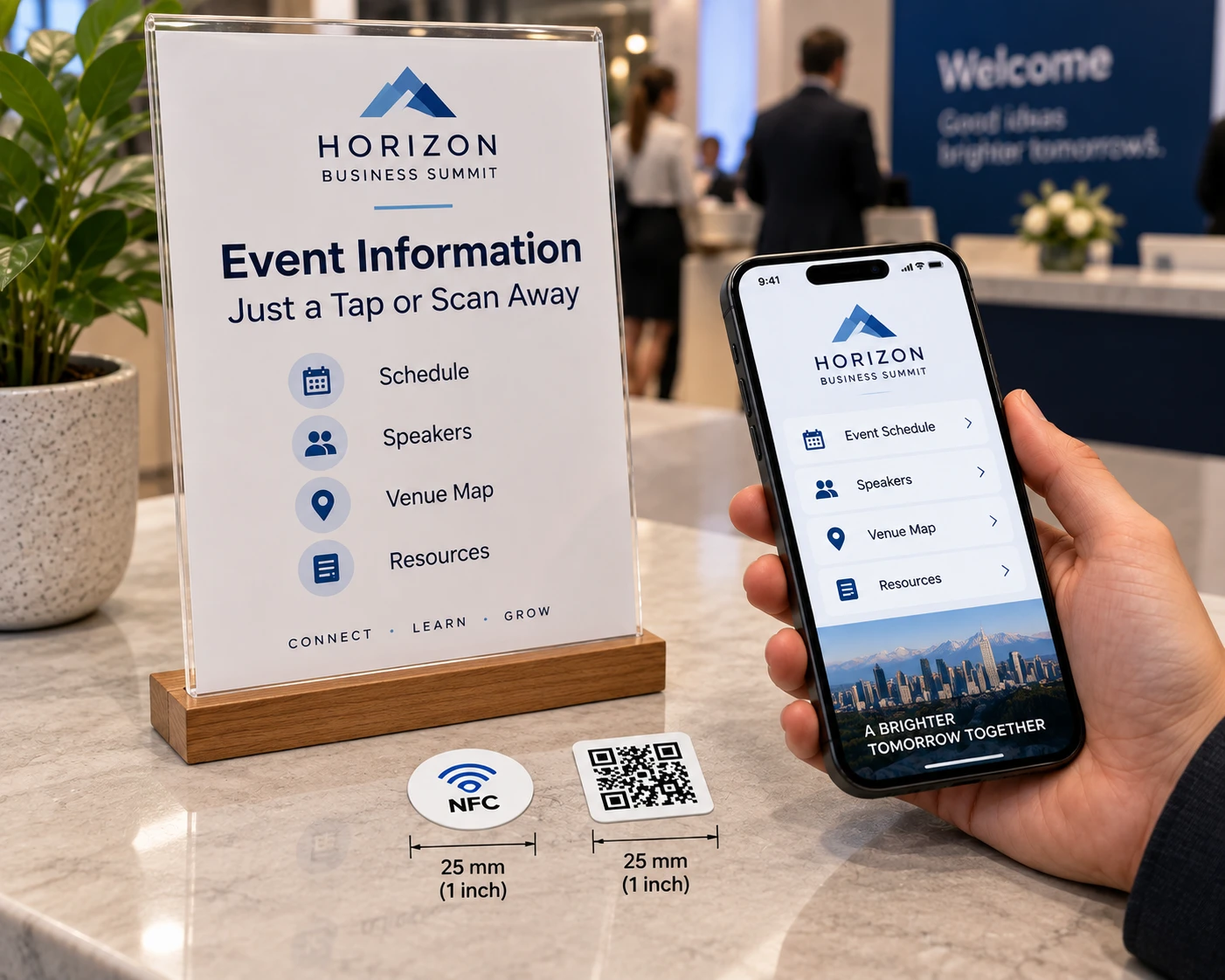
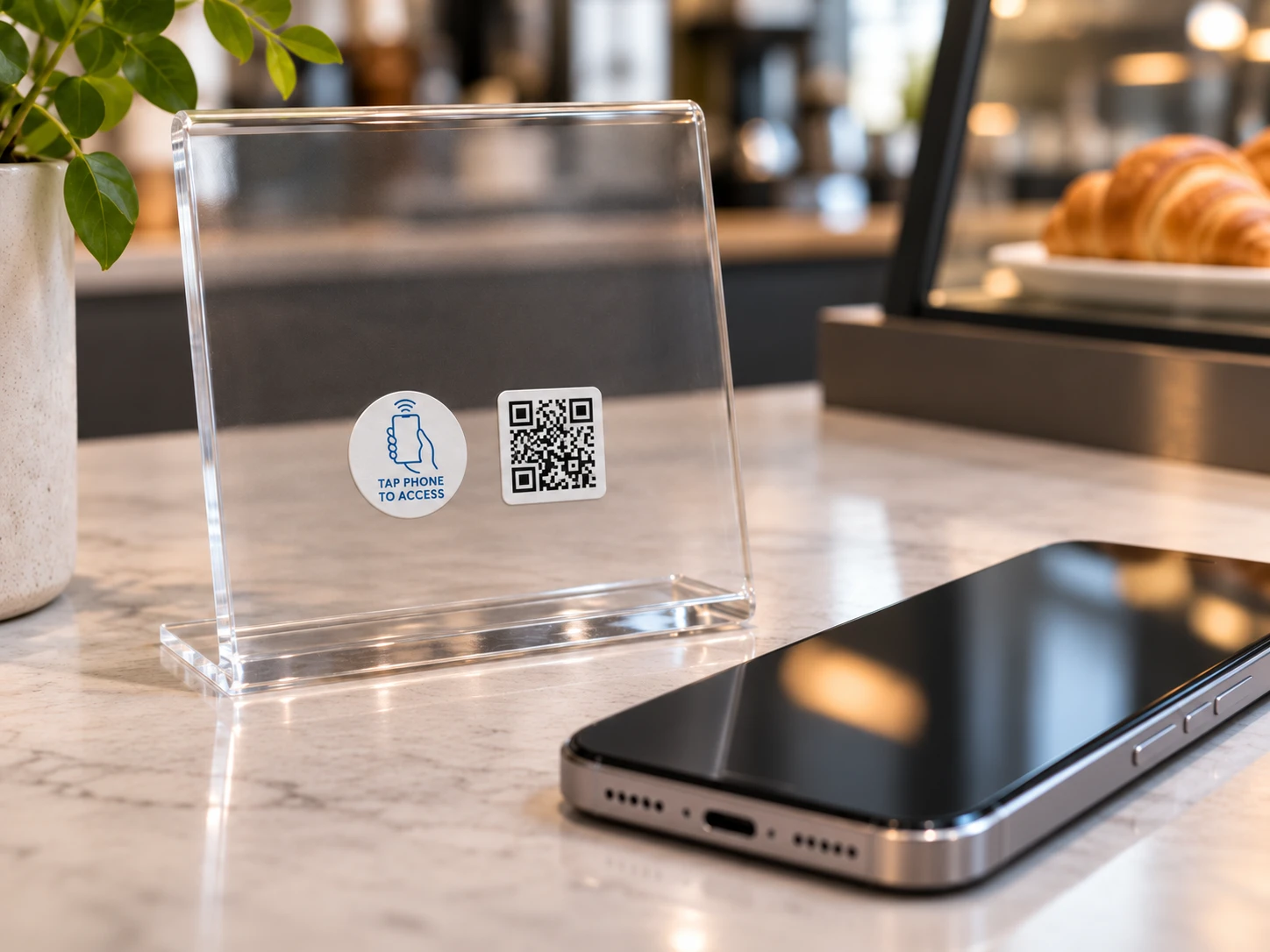
This NFCOP illustration shows a printed event information display, a smartphone and small NFC and QR Code stickers. It demonstrates a possible information-access touchpoint rather than an accessibility-certified installation.
How NFC and QR Code Stickers Connect Visitors to Information
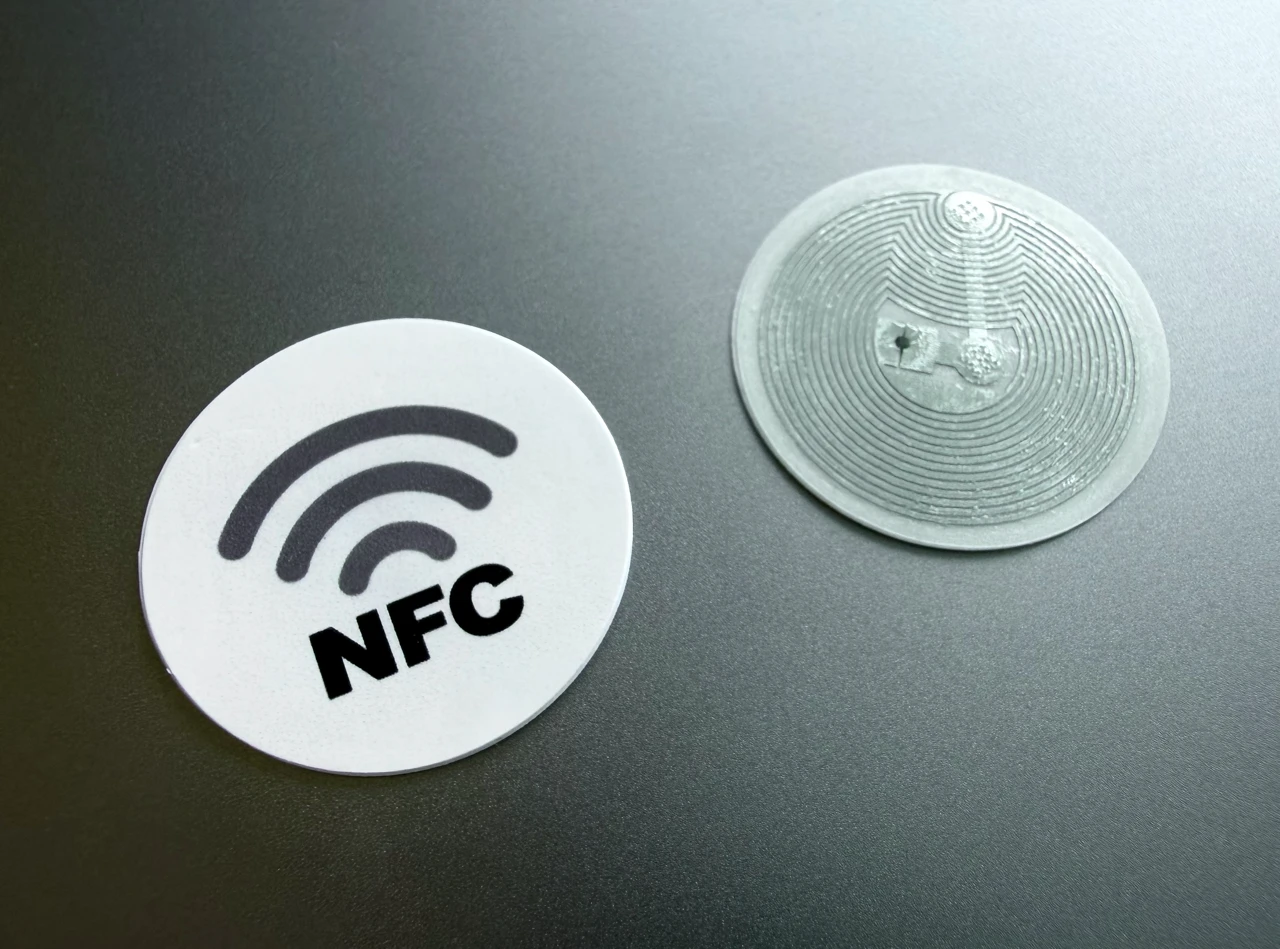
For ordinary website access, NFC technology is straightforward. An NFC sticker contains a small chip programmed with a destination URL. When a compatible smartphone reads the tag, the device can offer to open that address.
A QR Code sticker provides a scanning alternative. Both methods can direct visitors to the same webpage, making it unnecessary to maintain separate information pages for tapping and scanning.
For example, an information sign in a visitor center could provide the following access options:
- Physical placement: A clearly labeled information sign near the reception area.
- NFC action: Hold a compatible smartphone close to the NFC sticker and follow the link prompt.
- QR Code action: Scan the matching QR Code with a smartphone camera.
- Destination: The venue's existing accessible visitor information webpage.
- Visitor benefit: Access useful information about the location, its services and available assistance.
For ordinary URL links, a dedicated NFCOP application is generally unnecessary. The linked information still requires an appropriate web connection unless the venue provides another supported delivery method.
The Massachusetts State House proposal uses a different approach: it specifically requests a specialized accessible mobile application and administrative system. Standard NFC URL stickers should not be presented as a replacement for that complete solution.
Making NFC Visitor Information More Accessible
Adding NFC technology does not automatically make information accessible. An effective visitor information point needs an appropriate physical location, understandable instructions and a destination webpage that works with relevant accessibility features.
The U.S. government's guidance on accessible QR Code implementation identifies challenges for people with visual, mobility and cognitive disabilities. These include difficulty locating a code, positioning a smartphone or understanding how to use the interaction.
Organizations planning NFC and QR Code signage should consider several practical requirements:
- Consistent placement: Position information points where visitors can reach them, and consider tactile identification or other accessible ways to locate them.
- Clear instructions: Explain what the sticker opens with wording such as "Tap or scan for visitor information."
- Accessible webpages: Use readable text, logical headings, meaningful descriptions and appropriate support for assistive technologies.
- Alternative access: Offer a readable web address, conventional signage or staff assistance for people who cannot tap or scan.
- Practical testing: Check smartphone compatibility, QR readability, NFC response and the usability of the linked webpage.
The Web Content Accessibility Guidelines (WCAG) 2.2 provide a recognized reference for improving digital content accessibility. Physical signage also needs its own accessibility review, including consideration of visitors who cannot identify or reach the sticker.
A small sticker may be convenient, but it is not a substitute for tactile wayfinding, accessible building signage or human assistance. Accessibility planning should cover the complete visitor experience rather than only the digital destination.
How NFCOP Supports NFC Visitor Information Signs
Organizations with existing visitor information webpages can use NFCOP to create custom printed NFC stickers and matching QR Code stickers that open those pages.
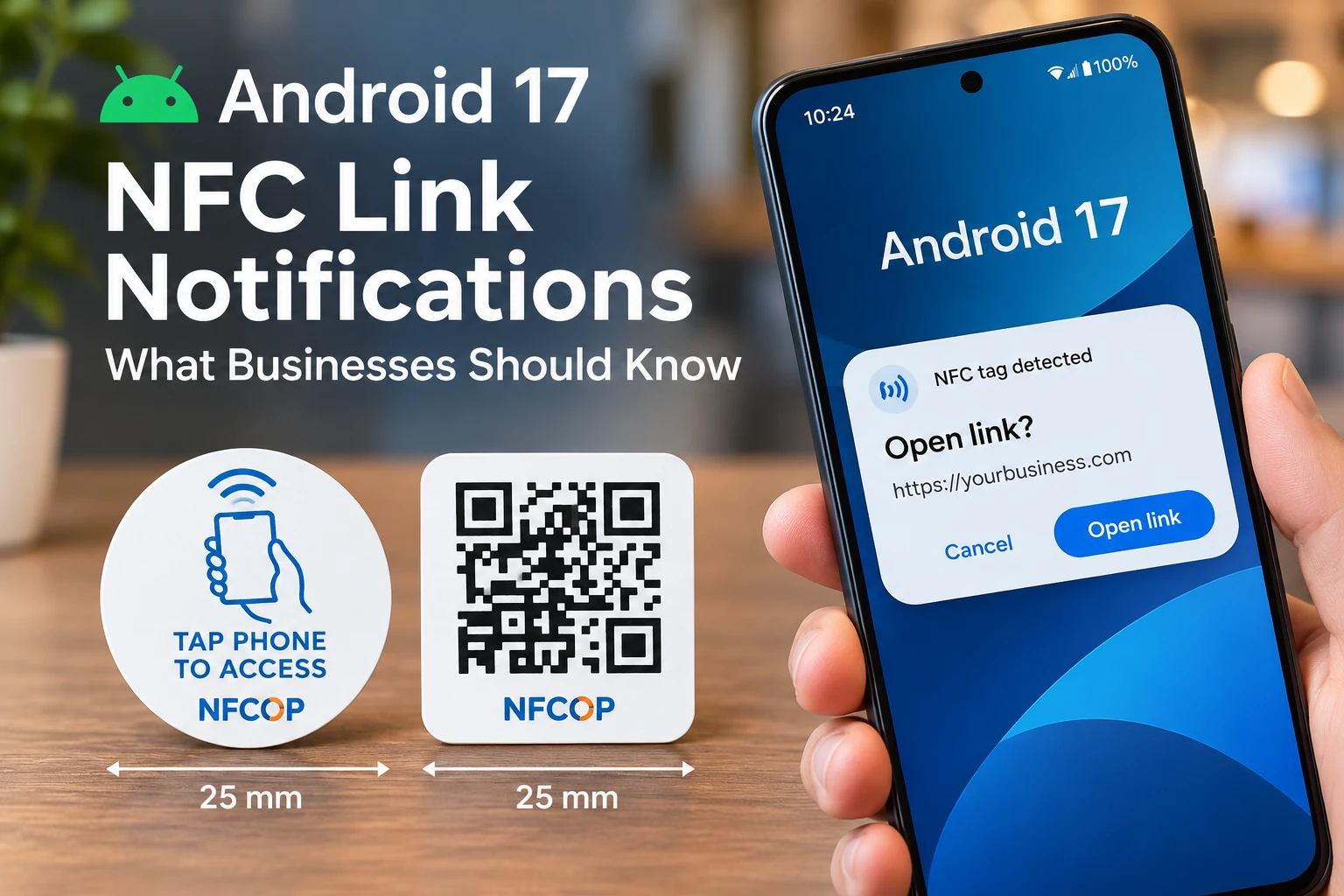
NFCOP supplies round 25 mm NFC stickers printed with a chosen design or logo and professionally pre-encoded with the customer's destination URL. Each order also includes matching 25 × 25 mm QR Code stickers, with both access methods opening the same web destination.
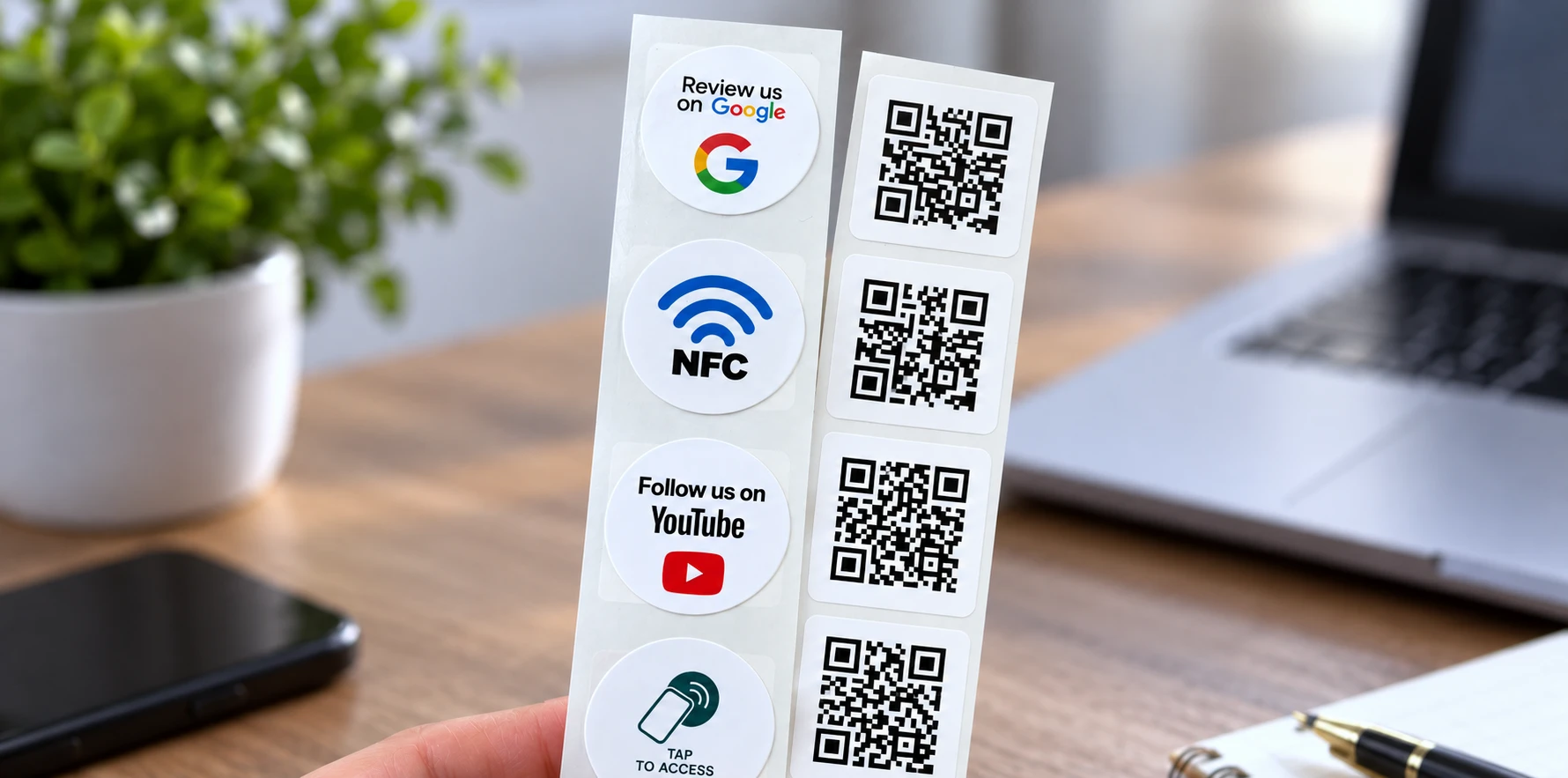
The stickers arrive prepared for use, with individual transparent protective films included. Businesses do not normally need to purchase NFC encoding equipment or program the tags themselves.
A venue can assign different URLs to different information points. For example, a reception sign may open a general visitor guide, while an exhibition information point opens a webpage dedicated to that exhibit.
NFCOP's optional Dynamic URLs allow customers to change a destination address after printing and review supported tap-and-scan statistics. This can be useful when visitor information moves to a new webpage, although usage statistics do not establish whether visitors successfully understood the content.
NFCOP provides the physical link-access stickers, not the accessibility content, visitor application or specialized software. The organization operating the venue remains responsible for the destination website and the accessibility of its information.
A Practical Starting Point for Visitor Information
The Massachusetts State House procurement highlights how NFC technology is being considered for more inclusive access to physical locations and objects. It also demonstrates that advanced accessibility projects can require specialized software and careful design.
For venues looking to begin with ordinary website links, a smaller project may be appropriate. Select one information location, prepare a useful accessible webpage and test a clearly marked NFC and QR Code information point with visitors and relevant assistive technologies.
Once the installation works reliably, the same approach can be considered for additional reception areas, exhibits, guest information displays and public facilities.
NFC tags for accessible visitor information are most useful when they help people reach information that is relevant, understandable and available through more than one access method.
To connect your existing visitor information pages to physical signs, explore NFCOP's custom printed, pre-encoded NFC tags and matching QR Code stickers.